KU MedChem Newsletter Fall 2024
News from the Chair 2024
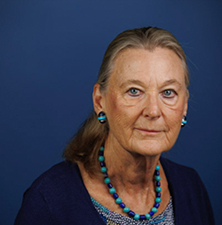 After a short hiatus we in the Department of Medicinal Chemistry are happy to send you our departmental newsletter once again. This is the first newsletter since the pandemic, and we hope you will find news regarding our departmental activities and faculty updates interesting.
We were fortunate to welcome two new faculty members. Dr. Luke Erber, Ph.D. in Biochemistry, Molecular Biology and Biophysics from the University of Minnesota. Dr. Erber did a postdoc at the University of Minnesota with Dr. Natalia Tretyakova. Dr. Iredia Iyamu, Ph.D. in Organic Chemistry from Northeastern University. Dr. Iyamu did a postdoc at Northeastern University with Dr. G.E. Schiltz. Please see their news later in the faculty news section as our faculty continues to do amazing research, mentoring and teaching our graduate students.
Congratulations to Dr. Shyam Sathyamoorthi and Dr. Mark Farrell who have been recently promoted to Associate Professor with tenure. Dr. Michael Wolfe was the recipient of a KU-funded Research Rising Project. Please see the details under the faculty news.
The department is currently searching for a new assistant professor as Dr. Jingxin Wang was recruited to the University of Chicago at the end of last year. We look forward to having a new faculty member join the department in Fall 2025.
This fall the department has welcomed five new graduate students from India, Nepal, and China. We also have welcomed three master’s only students from the United States and India. This will be an exciting fall with new students entering our department and working with their mentors on a variety of projects.
By now you may have heard that Dean Ron Ragan has decided to return to his faculty role in the Department of Pharmacy Practice. I was named Interim Dean of the School of Pharmacy by Provost and Executive Vice Chancellor Barbara Bichelmeyer effective May 12. Having served as a department chair for nearly 12 years, I
have broad support across the school until we complete a new search. We are preparing to launch a nationwide search for our next Dean of Pharmacy. Apurba Dutta, a long-time faculty member in our department will serve as our Interim Chair while I take care of pharmacy administration. I will continue to closely participate in departmental affairs while we mentor our junior colleagues and start the recruitment of new faculty members.
This just represents a small portion of what we have been up to in the Department. I am reminded every day how important our research and teaching are, and I am proud and honored to be a member of this department and surrounded by my dedicated colleagues.
Departmental News
New Program for a Terminal Master’s Degree in Medicinal Chemistry – On Campus (Effective Fall 2022)
The Master of Science degree (M.S.) in Medicinal Chemistry provides advanced training in synthetic organic chemistry, chemical biology, and scientific writing with classroom lectures and hands-on research training in faculty laboratory. Students attend classes on KU's Lawrence campus, seeking advanced training for academic and/or professional advancement. In contrast to our Ph.D. students who are supported by their mentors’ grant funds, Master's students are responsible for their own tuition, fees and living expenses. The first students to receive the M.S. degree are Mauricio Bahena Garcia, a Fulbright student from Cuernavaca, Mexico and Rahul Mahendra Hedau from Maharashtra, India. More information can be found on the departmental website.
MIKIW Updates
MIKIW 2025 will be held in Kansas. The students are looking forward to planning and hosting the meeting April 25-27, 2025 celebrating its 50+ years of continuous activity across five states.
MIKIW 2024 Chicago
This year MIKIW was hosted by the University of Illinois in Chicago. Kansas was represented with the following students presenting oral presentations: Matthew Russolillo in Dr. Mark Farrell’s group, Victor Fadare in Dr. Zarko Boskovic’s group, and Shalakha Hegde in Dr. Jingxin Wang’s group. The keynote speaker was Dr. Daniel K. Nomura, UC Berkeley, Professor of Chemical Biology. The title of his talk was “Reimagining Druggability using Chemoproteomic Platforms”.
MIKIW 2023 Minnesota
Kansas was represented with the following students presenting oral presentations: Samuel Gary in Dr. Steve Bloom’s group, Annu Anna Thomas in Shyam Sathyamoorthi’s group and Shweta Malvankar from Dr. Mike Wolfe’s group. The keynote speaker was Dr. Nicole Goodwin, Director in the Discovery High-Throughput Chemistry Group in Medicinal Chemistry at GSK.
Memorial Lectures
Edward E. Smissman Memorial Lecture – December, 2024
Dr. Benjamin Cravatt, Norton B. Gilula Chair and Professor in Biology and Chemistry, Scripps Research Institute will present the Smissman Lecture on December 12, 2024. Check the Medicinal Chemistry website for the latest information.
Edward E. Smissman Memorial Lecture - October, 2022
The Edward E. Smissman Lecture was presented by Dr. Craig Crews from Yale Center for Molecular Discovery. He presented two scientific lectures "Improving on Mother Nature: From Epoxomicin to Carfilzomib/Kyprolis" and "PROTACs and Targeted Protein Degradation: A New Therapeutic Modality."
Mathias P. Mertes Memorial Lecture - October, 2023
The Mathias P. Mertes Memorial Lecture was presented by Dr. Scott Miller from Yale University. He presented the award lecture on "Searching for Selective Catalytic Reactions in Complex Molecular Environments."
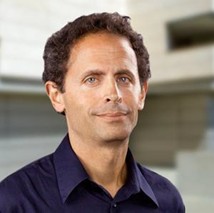
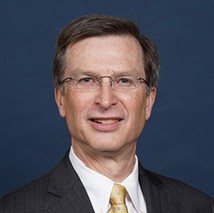
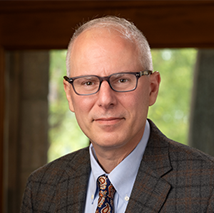
Departmental and Student Awards
Irsay-Dahle Award for Excellence in Medicinal Chemistry
Samuel Gary, a graduate student in Dr. Steve Bloom’s laboratory, was selected as the 2024 Irsay-Dahle Award winner. Samuel received his undergraduate degree in biochemistry from West Virginia University at Morgantown, West Virginia. The Irsay-Dahle Award was established to provide an annual award to an outstanding senior graduate student in the department. Recipient qualifications include quantity and quality of research accomplished, original research proposal, quality of seminars, GPA, and citizenship on departmental affairs. Sam will be defending his dissertation in early 2025 and has plans to do a postdoc after his defense.


Dr. Gregory L. and Frances L. Lauver Fellowship in Medicinal Chemistry
Dr. Lauver earned a B.A. in chemistry from the University of Kansas in 1969. After earning his M.D. from Northwestern University Medical School in Chicago, he completed an internal medicine residency at the Mayo Clinic and a pulmonary fellowship at the University of Arizona. Dr. Lauver practiced pulmonary and critical care medicine in the Phoenix area for many years.
In 1985, Dr. Lauver and his wife, Frances Lamont Lauver, established an undergraduate scholarship at KU in honor of his parents, James L. and Enda Fay Lauver. In 2014, they also established the Dr. Gregory L. and Frances L. Lauver Medicinal Chemistry Fellowship in support of graduate student research in medicinal chemistry.
Dr. Lauver credits much of his success to his undergraduate education at KU. "My KU professors, especially the chemistry and bioscience faculty, helped launch my career in medicine. The medicinal chemistry faculty nurtured my interest in respiratory pharmacology," Lauver said.


Doctoral Student Research Fund (DSRF)
Samuel Gary received the DSRF award in 2023. He was awarded $1,500 to further his research in medicinal chemistry. Samuel works in the laboratory of Dr. Steve Bloom. His research area is peptide medicinal chemistry and the introduction of unnatural amino acids that control the three-dimensional structure of peptides.
Alumni News and Awards
Mossberg Graduate Honors Symposium Distinguished Graduate Award
 The title of Dr. Flynn's address was "From Company Concept to Marketed Oncology Therapeutics." It provided an overview of the founding of Deciphera Pharmaceuticals and the development of its underpinning Switch Control Inhibitor technology. This platform has been utilized to discover and develop first-in-class or best-in-class kinase inhibitors, five of which have been studied in human oncology clinical trials.
The discovery of ripretinib (QINLOCK®) and vimseltinib was presented at the lecture. QINLOCK® is a marketed best-in-class KIT kinase inhibitor approved in 13 countries for the treatment of fourth-line gastrointestinal stromal tumor. Vimseltinib, a potential best-in-class selective CSF1R inhibitor, has completed a phase 3 clinical study for the treatment of tenosynovial giant cell tumor. An NDA for vimseltinib was slated for submission in Q2 2024.
Gary Grunewald Alumni Award
This award is in the planning stage with Mike Rafferty heading a selection committee to make final arrangements. A Medicinal Chemistry Alumnus will be selected to receive the award and presented at a dinner. The award will be funded by Dr. Grunewald’s estate.
Faculty News (organized alphabetically)
Dr. Steven Bloom
The Bloom lab continues to lead its charge to "change the way that academicians and industrial partners approach peptide medicinal chemistry." Their efforts to model nature's use of dehydroalanine (Dha) residues as a 'pro-amino acids' have resulted in several new technologies that enable a single Dha site in a peptide to be transformed into many numbers of chemically unique variants, both natural and unnatural, through the addition of one- and two-electron nucleophiles. Using these platforms, the Bloom lab has engineered peptidomimetics for arange of debilitating diseases, including ischemic stroke, cardiovascular disease, monogenic forms of obesity, and HIV-1. The Bloom lab is now in the process of merging this powerful new approach for peptide library generation with contemporary screening platforms, such as DNA-encoded libraries, to accelerate the discovery, optimization, and translation of superior peptide drugs to the clinic. So, where are they going next, you might ask? The Bloom lab is embarking on a quest to identify templates made entirely of pro-amino acids that can give rise to any polypeptide through reaction with comprehensive inventories of different nucleophiles. These ‘pro-polypeptides’ represent a conceptionally new way to build peptides, and our readers should be on the lookout for some exciting results coming soon!
Dr. Zarko Boskovic
News from the Boskovic lab 2023/24
The major news from the lab last year is that we produced (minted?) the first doctor in the lab: Manvendra Singh satisfied all the requirements for a Ph.D. degree by publicly presenting his research on May 10. This seminar followed closely the one he delivered as an Irsay-Dahle recipient. He then stayed for a few more months in my lab as a postdoc and in September joined the newly formed Arena Bioworks in Cambridge, MA as a staff scientist.
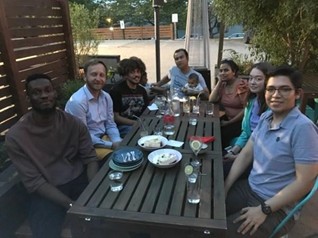
Manvendra left an indelible mark on the research group, figuratively speaking, but he also made a literal mark on my office ceiling, signing his name where the champagne cork dented the ceiling tile (Figure 1). Such is the tradition. Don’t tell Facilities. The thesis defense was followed by a small group dinner at a Lawrence restaurant Culinaria with Manvendra’s family joining the research group (Figure 2) which grew with the addition of Mauricio, a Fulbright scholar from Mexico, and Victor from Nigeria. Undergrad cohort in the lab now includes Elizabeth Miller, Jax Rosekrans and as of recently Ian Sharp.
Earlier in 2023, we drove to Indianapolis to attend the spring national meeting of the American Chemical Society where I presented a talk and students their posters. En route, we stopped at the St. Louis arch (Figure 3). The rest of the year was consumed with the work on the new research paper from the lab which was recently published in the Journal of Organic Chemistry. This continues our interest in using photochemistry, and wrestling control over the high energy intermediates that can be very effectively used to create novel chemical motifs. Early in the year, our Angewandte Chemie paper described a previously overlooked way of making simple dipoles from strained heterocyclic ketones. Using light, of course. (Kansas is the 8th sunniest state in the country, so it makes sense to use light for chemical transformations.)
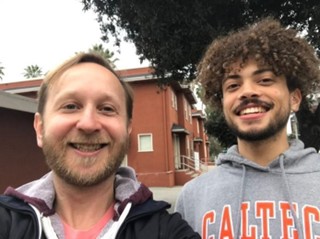
Since this is my mandatory year for submitting the tenure package to the university, I have been travelling to various departments and conferences, giving talks, meeting people, telling them what we have accomplished in the last five years. On one of these travels, I met up with the undergrad from the lab, Bryce Gaskins, who is now a first-year graduate student at Caltech (Figure 4).
Taking stock of the research and the impact that our small group at KU has already had on developing future scientists has made the PI of the lab very proud and optimistic about what the future holds. Thank you for following and supporting our efforts!


Dr. Luke Erber
My first year of teaching and research at the University of Kansas has been eventful!
As a brief introduction, the long-term goal of the Erber research program is to promote a paradigm shift in the way we study and target disease-relevant signals in human diseases like cancer, metabolic disorders and degenerative diseases. This research goal is accomplished by integrating chemical synthesis, cell biology and mass spectrometry platforms, to identify novel biological mechanisms underlying disease. In one research direction, we will be using biochemical and quantitative techniques to define DNA-protein interactions contributing to disease progression. In this work, students will define formation and repair kinetics of DNA-protein cross-links formed by metabolic by-products. These quantitative approaches will be used to assess disease risk and therapeutic interventions to limit formation of DNA lesions. In a second research direction, we will be tackling a major gap in knowledge surrounding the understanding of chemical motifs controlling protein-protein interactions. We will be designing, synthesizing, and deploying engineered protein-selective chimera ligands capable of tagging native protein interactions for characterization by quantitative mass spectrometry. Students will expand the use of these highly adaptable tools to identify protein interactions useful for drug development.
In this first year, startup activities included setting up a functional lab with freezers, glassware, HPLC instrumentation, balances, chemicals, and a cell culture space. We have four talented undergraduate students who joined the lab. They have been instrumental in testing assays and starting lab projects. We are also excited to have Dr. Reinner Omondi join the Erber lab. He completed his Ph.D. education in Chemistry at the University of KwaZulu-Natal, in South Africa, under the mentorship of Professor Stephen Ojwach. His Ph.D. work was on the substitution kinetics, biological activities, and computational approaches of mixed donor palladium(II) complexes. He also completed a short postdoctoral training stint with Professor Gregory Smith at the University of Cape Town, South Africa, where he was working on the photodynamic therapy of platinum group metal complexes. Reinner will be driving chemical synthetic projects in the lab, and we are excited for what the future holds for him here!
In March, I chaired the spring virtual symposium of the ACS, Chemical Toxicology Division. The topic was "Integrative Analysis of ‘Omics Data for Identification of Pathways Related to Toxicity." We heard from five wonderful speakers on how 'Omics technologies are used to study biotransformation of xenobiotics, to identify the cellular response to xenobiotic exposure, and to provide information for personalized patient treatment.
In May, we published our first research manuscript. In this work, we examined the role of methylglyoxal in the formation of DNA-protein crosslinks. This study provides the first evidence for methylglyoxal-mediated DNA-protein cross-linking in living cells, prompting future studies regarding the relevance of these toxic lesions in cancer, diabetes, and other diseases linked to elevated methylglyoxal levels.
I look forward to the continued growth of my research program and the department in the coming year!

The Erber lab visits Fields & Ivy for dinner to celebrate end of Spring 2024 semester and exams. Pictured (L-R): Eli Barnes, Dr. Reinner Omondi, Dr. Luke Erber, Gabrielle Fisette, Farai Musonza.
Dr. Mark Farrell
Research in the Farrell group continues to focus on the roles of carbohydrate-protein interactions in disease development and progression. In the past year, we were fortunate to be awarded a Maximizing Investigators’ Research Award (MIRA-R35) to bolster our ongoing research efforts. We are currently focused on developing tools to identify carbohydrate-protein interactions, and tools that permit us to better understand how these interactions contribute to disease progression and development. In addition, we continue to design and synthesize molecules to direct the immune system toward an invasive pathogen or malignant cells. In this area, we have primarily focused our efforts on the development of molecules that enhance the killing of diseased cells by natural killer cells. We have made a number of very interesting observations, which we are currently preparing for publication. We have prepared molecules that can alter the composition of the carbohydrate coating that covers cells, but perhaps more importantly, we have designed and synthesized derivatives of these molecules that act selectively on cancer cells. Importantly, doing so significantly enhances the ability of natural killer cells to recognize and kill the treated cancer cells, relative to untreated and non-tumorigenic epithelial breast cells.
Over the past two years, we have seen some changes in the personnel of the group. Patrick Ross and Kathia Antillon graduated with a Ph.D. and M.S. respectively, while Dr. Suresh Kurhade accepted a position as a Principal Scientist at Schrödinger. We have also welcomed many new people to the lab: Matthew Russolillo is currently a 3rd year Ph.D. student in the lab and has been honored with positions on the NIH Dynamics Aspects of Chemical Biology Training program and the Lauver Medicinal Chemistry Fellowship. Rahul Hedau is a talented 2nd year M.S. student who is currently wrapping up his research in the lab. We have also added Drs. Wariya Nicachonkul, Kelsey Knewtson, Rupa Addanki, and Sureshbabu Popuri to the team. These postdoctoral researchers bring a range of expertise to the group and are pushing our projects forward. I look forward to sharing the teams’ exciting results with you all in the near future.

Mark Farrell's Group (L-R) First Step: Shannon Arnold, Wariya Nirachonkul, Rahul Hedau. Second Step: Rupa Addanki, Calen Schuckman. Third Step: Brooklyn Harrison, Kelsey Knewson, Matt Russolillo, Mark Farrell
Dr. Iredia Iyamu
Transitioning to an independent career position has been both intriguing and unraveling. The past couple of months have been exciting, and I am grateful to everyone in the Department of Medicinal Chemistry for their continued support. Starting a new lab has been fascinating, and the experience has been rewarding. It has been great seeing the transformation of the lab from an empty space a couple of months ago to one completely equipped for organic synthesis, biochemical assay development, and cell-based assays. The group is also growing in numbers as we have others join to assist with the research development. From working solo, we have added two postdocs.
Mahammad Ghose Shaik, a new postdoctoral scholar, is working on developing chemical probes and biochemical assays to identify and evaluate inhibitors for lysine methyltransferases. Namdeo Gangathade will work on developing chemical probes to study the function of histidine methyltransferases in various disease models. A graduate student will also be joining the group in the Fall. We are very excited about what the immediate future holds for us and eagerly look forward to it!
Dr. Shyam Sathyamoorthi
AY 2023-2024 was eventful! My first Ph.D. student Annu Anna Thomas successfully defended her dissertation and departed for a postdoctoral fellowship at the University of North Carolina, Chapel Hill. Two postdoctoral scholars also departed for new positions. Dr. Someshwar Nagamalla, who was with me for four years, left for another position at the Medicines for All Institute at Virginia Commonwealth University. Dr. Debobrata Paul, who was in my group for two years, left for another postdoctoral position at the University of Illinois, Chicago in the Adibekian laboratory. Three new postdoctoral fellows joined my laboratory: Dr. Abhijit Manna (Ph.D. from IIT Kanpur, V.K. Singh Laboratory), Dr. Mintu Munda (Ph.D. from IISER Bhopal, Alakesh Bisai Laboratory), and Dr. Raju Silver (Ph.D. from IICT, Hyderabad, Srivari Chandrasekhar Laboratory). I did a bit of travelling this year but much less than during my “tenure tour!” I was fortunate to be invited to give presentations at the University of Kentucky and at the University of Texas, Arlington. In addition, I was promoted to Associate Professor with tenure this year. I am grateful to the Department of Medicinal Chemistry and to the University of Kansas for their generous support during my time as an assistant professor.
Dr. Jingxin Wang
The W.M. Keck Foundation awards $1.2 million to KU and the University of Chicago team to transform understanding of RNA splicing. Dr. Jingxin Wang, assistant professor, applied for and received the Keck funding to tickle a long-unresolved problem in biomedical research – finding molecules able to target the “undruggable proteome.” Using RNA splicing modulators coupled with deep learning models, their research holds promise as a game-changer in drug discovery and disease research. Unfortunately, in the fall of 2023, Dr. Wang took a faculty position at the University of Chicago. In fall 2024, the department initiated a new faculty search to replace Dr. Wang's position.
Dr. Mike Wolfe
The research group directed by Prof. Michael Wolfe made major progress during the past year toward elucidating the molecular basis of Alzheimer’s disease, with implications for drug discovery. In a research article published in the open-access journal Cell Reports, the group reported that genetic mutations that fate carriers to onset of Alzheimer’s disease in midlife can lead to loss of neuronal connectivity (synapses) in a manner that is independent of the amyloid beta-peptide. The long-held amyloid hypothesis holds that aggregation of this peptide triggers a cascade of events that lead to loss of synapses, neurodegeneration, and dementia. Rare inherited mutations that cause Alzheimer’s disease are found in the substrate and enzyme that produce amyloid, seemingly supporting the amyloid hypothesis.
The Wolfe Group, in collaboration with several other investigators at KU, Harvard and Tsinghua University in Beijing, showed that these mutations lead to stalled enzyme-substrate complexes. These stalled complexes, not the amyloid products, can trigger loss of synapses in a new roundworm (C. elegans) genetic model. Wolfe Group member coauthors were (in order of appearance in the author list) Research Assistant Professor Sujan Devkota, Postdoctoral Researchers Vaishnavi Nagarajan and Arshad Noorani, graduate student Caitlin Overmeyer, and former lab member and Associate Researcher Sanjay Bhattarai (now at Exelixis in Alameda, CA). Graduate student Shweta Malvankar also co-authored a research article in ACS Chemical Neuroscience on how this Alzheimer-causing enzyme processes an alternative substrate that is critical to the growth and health of all multi-cellular animals. Graduate student Tristan Sprague was awarded a two-year traineeship on the KU Chemical Biology Training Grant. KU undergraduate Parnian Arafi has also generated considerable data worthy of first authorship on a manuscript in preparation. For her efforts, Parnian won a highly competitive KU Undergraduate Research Award in April. Mike also continues to lead the KU Research Rising Project "Big Data for Drug Discovery," which allowed the hiring of two new assistant professors to the department (Luke Erber and Iredia Iyamu).
Research Rising Project "Big Data for Drug Discovery" – Mike Wolfe
Please visit the Research Rising Project for more information on Dr. Wolfe's research.
KU Pharmacy joins Wichita State in new Wichita Biomedical Campus
KU Pharmacy joins Wichita State in new Wichita Biomedical Campus
Two Kansas universities, Wichita State University and the University of Kansas, joined Kansas Governor Laura Kelly in breaking ground May 8, 2024 on a project that will benefit the entire state: the Wichita Biomedical Campus. The groundbreaking represents the beginning of construction on a $300 million, 471,000-square-foot joint health sciences center in downtown Wichita.
A partnership between the two universities, the facility will combine the Wichita campuses of KU School of Medicine and KU School of Pharmacy. In addition to its main location in Lawrence, KU School of Pharmacy currently has a Wichita location that shares a campus with KU School of Medicine-Wichita, so this shared facility with Wichita State is yet another opportunity for collaboration. This will strengthen the collaboration and partnerships in the Wichita community and create new opportunities for innovation and research in pharmacy and the health sciences.

(L-R) Pharm.D. student Dylan Montgomery, Associate Dean for Wichita Brad Newell, former Dean Ron Ragan and Chancellor Doug Girod at the groundbreaking May 8 for the Wichita Biomedical Campus.

Medicinal Chemistry Faculty - Academic Year 2024-2025 (L-R) Front Row – Barbara Timmermann, Shyam Sathyamoorthi Second Row – Mike Wolfe, Steve Bloom Third Row – Zarko Boskovic, Luke Erber Fourth Row – Mark Farrell, Iredia Iyamu, Apurba Dutta
In Memoriam
We are saddened to announce the passing of the following colleagues:
Gary L. Grunewald, KU professor emeritus, passed away peacefully on February 20, 2023, at the age of 85. Gary was born in 1937 in Tekoa, Washington, as the only child of Ruby and Harold Grunewald. After completing his Ph.D. degree at the University of Wisconsin, Gary joined the University of Kansas in 1966 as an assistant professor in the newly created Department of Medicinal Chemistry. He was chair of the Department of Medicinal Chemistry from 1994 to 2003 and interim dean of KU School of Pharmacy from 1993 to 1994. He received numerous teaching awards, trained nearly 40 Ph.D. students and taught pharmacy students over his 50-year career as a teacher, mentor, and friend to so many. Gary was also active in the medicinal chemistry community external to KU. He served the American Chemical Society Division of Medicinal Chemistry in various capacities including chairman (1993–1994). He was selected as a Fellow of the American Association of Pharmaceutical Scientists (2006), a Fellow of the American Chemical Society (2010), and was an inaugural member of the Division of Medicinal Chemistry Hall of Fame (2006). Gary also was a founding board member of the Medicinal and Bioorganic Chemistry Foundation in 1993, a non-profit organization dedicated to education of medicinal chemists in academia and industry. Gary leaves behind his former wife, Joan, cousins Sheri Riley, Gina Watson Fraser, and James Watson, and many former students and colleagues who have benefited from his teaching and mentoring. In lieu of a service Gary wishes everyone to remember him in their own way. After cremation his ashes were buried at Pioneer Cemetery on KU West Campus.
Betty Mitscher, wife of Lester Mitscher passed away on February 11, 2024.
Pat Hannapassed away on May 2, 2022, see website below for obituary.
Patrick Woster, Ph.D., friend of the department, passed on July 15, 2023.
Morris Faiman, professor in Pharmacology and Toxicology, passed on April 23, 2024.
Norma Henley, administrative associate, passed on July 4, 2023.
Gifts to the Department
Privately given support is so helpful and so important to our overall mission. You may think of KU as a state university, but did you know that more than 80% of its annual operating budget actually comes from non-state sources? The same is true for the Department of Medicinal Chemistry. Our faculty get a good number of external grants for research, but research is all those funds can be used for. And while research is a big part of what we do, there are many other student-focused activities that enrich our program but cannot be supported using state or grant funds.
Examples include the costs associated with graduate student recruiting, expenses for external seminar speakers, refreshments at departmental events and gatherings, and departmental support for MIKIW meetings. Supporting first-semester graduate students who are rotating through faculty labs while taking courses is a major expense that was traditionally met by appointing first semester students to faculty research grants. With research grants becoming ever more difficult to get, it is becoming increasingly critical to have other ways to support first-semester students.
That's why contributions from friends and alumni are so important to us. Any amount at any time really helps, no doubt about it. Our current students are literally attempting to follow in your footsteps. Won't you please help us help them, by contributing to the Department of Medicinal Chemistry in support of its graduate program?
Supporting students this way also supports their faculty mentors indirectly. It's easy to do with your credit card - just Choose a Gift Amount. Alternatively, you can contact our Development Director at the KU Endowment Association, Kyle
Zerr, at 785-832-7477 or by email at kzerr@kuendowment.org. He will be happy to answer your questions about our needs or help you set up a planned gift to the Department.